
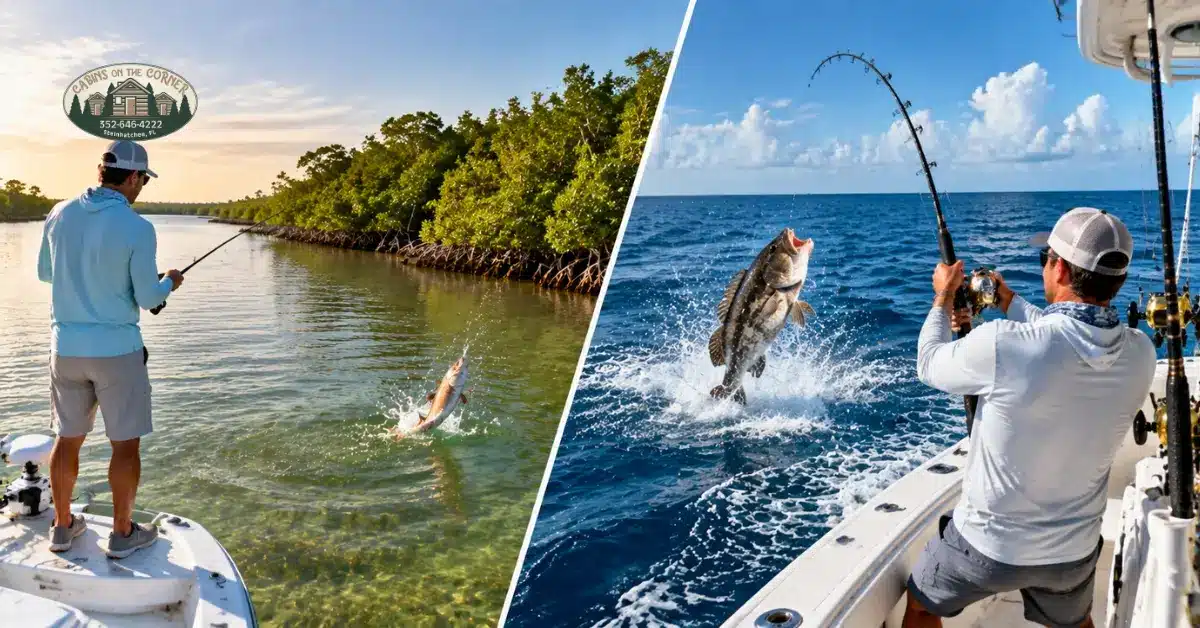
Inshore vs offshore fishing in Steinhatchee comes down to three things: how far you want to travel, what you want to catch, and how much you want to spend. Steinhatchee sits on Florida’s Big Bend coast, and both fishing styles are available right from town. Cabins On The Corner sits minutes from the boat ramp, making it an easy base for either style. This guide breaks down the real differences so you can book the right trip the first time.
TL;DR
- Inshore fishing in Steinhatchee stays close to the boat ramp, targeting redfish, spotted seatrout, and flounder on the flats and oyster bars.
- Offshore fishing runs past the nearshore reefs to ledges 25 miles or more out, targeting gag grouper, red snapper, and amberjack.
- Inshore half-day trips run $400 to $550; offshore trips typically start around $800 and climb from there.
- First-timers and families do best inshore. Experienced anglers chasing bigger fish should book offshore.
- Scalloping is a third local option, separate from the inshore/offshore choice, running June through early September.
What Is Inshore Fishing In Steinhatchee?
Inshore fishing in Steinhatchee means working the Steinhatchee River, Deadman’s Bay, and the grass flats around them. Boats rarely travel more than a few miles from the ramp. The water stays shallow, calm, and protected from wind most days.
Anglers target redfish, spotted seatrout, flounder, and sheepshead here. Oyster bars hold redfish that ambush bait along the current. Grass flats hold seatrout that chase shrimp and pinfish across open potholes. Docks and bridge pilings hold sheepshead and flounder near structure.
Light tackle handles all of it. A 10 to 20 pound test line and a medium-action rod cover most inshore species around Steinhatchee. Trips run 4 to 6 hours, and captains supply gear, bait, and licenses on most charters.
Families and first-time anglers often start here because the water stays calm and the fish stay active most of the year.
Live shrimp under a popping cork covers most of what swims these flats. Topwater plugs work well early in the morning when trout feed near the surface. A local guide who knows the tide on Deadman’s Bay will put you on fish faster than any map or app.
What Is Offshore Fishing In Steinhatchee?
Offshore fishing in Steinhatchee starts where the inshore waters end. Nearshore reefs and rock piles sit 8 to 10 miles out and hold grouper and snapper in shallower water. True offshore trips push past that boundary, running to natural ledges around 25 miles out, and sometimes 30 miles or more for deeper structure in 60 to 100 feet of water.
Gag grouper, red grouper, red snapper, and amberjack dominate the catch out here, according to NOAA Fisheries. Spring and fall bring king mackerel through the area as they follow warmer water along the coast. Heavier tackle handles the fight: conventional reels, 50 to 80 pound braid, and stiff rods built to pull fish off rocky bottom.
These trips run 6 to 8 hours and demand more from both the boat and the angler than a morning on the flats.
A captain who fishes the Big Bend regularly knows which rock piles are holding fish that week. The bottom here shifts with pressure and bait movement, so local knowledge matters more offshore than it does on the flats.
Inshore Vs Offshore Fishing In Steinhatchee: Cost, Species, And Trip Comparison
| Category | Inshore | Offshore | |
| Distance from town | Within a few miles of the ramp | 8 to 30+ miles out | |
| Trip length | 4 to 6 hours | 6 to 8 hours | |
| Target species | Redfish, seatrout, flounder, sheepshead | Gag grouper, red grouper, red snapper, amberjack | |
| Typical cost | $400 to $750 | $800 to $1,600 | |
| Tackle | Light, 10 to 20 lb line | Heavy, 50 to 80 lb braid | |
| Skill level | Beginner-friendly | Intermediate to advanced | |
| Best for | Families, first-timers, calm-water anglers | Experienced anglers chasing bigger fish |
Use this table as a starting point, then weigh it against the season and your group’s experience level before you book a trip. Review pricing and policies at Cabins on the Corner for cabin and RV site rates alongside your charter budget.
Steinhatchee Fishing Types At A Glance
Inshore and offshore aren’t the only Steinhatchee fishing types worth knowing about. Nearshore fishing sits between the two, working reefs and rock piles within about 9 miles of the coast for grouper and cobia without a long run out. Scallop season runs on a separate season entirely, typically June 15 through early September, and pairs well with a half-day inshore trip during the same visit.
Neither of these competes with the inshore or offshore decision. Treat them as add-ons once you’ve settled on your main trip type.
Which Should You Choose: Inshore Or Offshore Fishing In Steinhatchee?
Book inshore if this is your first saltwater trip, you’re traveling with kids, or you want a shorter, more affordable day on calm water. Inshore fishing also suits anyone prone to seasickness, since the boat stays in protected creeks and bays the entire trip.
Book offshore if you’ve fished before and want to test heavier tackle against grouper or snapper. These trips demand more time and a bigger budget, and Gulf waters here can turn choppy fast, so plan for a full day and a captain who checks conditions closely before running out.
Groups who want both can pair a half-day inshore trip with scalloping, or split a longer visit between the two styles.
Ask your captain directly which trip fits your group before you book. A good guide in Steinhatchee would rather set the right expectations upfront than take your money for a trip that doesn’t match your group.
Best Season For Inshore And Offshore Fishing In The Big Bend
Spring brings redfish and seatrout to life on the flats while offshore grouper feed aggressively before summer heat sets in. Summer adds scalloping to the mix, and gag grouper stay active on the nearshore reefs through the warmest months. Fall consolidates baitfish along the coast, drawing king mackerel close to shore and pushing redfish toward creek mouths.
Winter slows the pace but doesn’t stop the action. Sheepshead gather thick around bridges and dock pilings, and grouper fishing on the deeper ledges stays productive through the cold months. Check the current Gulf grouper season dates and red snapper season dates from the Florida Fish and Wildlife Conservation Commission before locking in an offshore trip, since federal and state seasons shift from year to year.
This Big Bend fishing guide holds true across most of the calendar. Wind and water clarity on a given week usually matter more than the season itself.
Frequently Asked Questions
How Much Does Inshore Fishing Cost In Steinhatchee?
Inshore charters in Steinhatchee typically run $400 to $550 for a half day and $600 to $750 for a full day, covering gear, bait, and licenses for up to four anglers.
How Much Does Offshore Fishing Cost In Steinhatchee?
Offshore charters start around $800 and can climb to $1,200 or $1,600, depending on trip length and how far the boat runs to reach productive structure.
Is Offshore Fishing Better For Beginners Or Experienced Anglers?
Offshore fishing suits experienced anglers better. Longer runs, heavier tackle, and rougher water make inshore trips the easier starting point for beginners.
Can You Do Inshore And Offshore Fishing On The Same Trip?
Most single-day trips focus on one style or the other. Groups staying multiple days often book an inshore trip one day and an offshore trip the next.
What Is The Best Time Of Year To Fish In Steinhatchee?
Spring and fall offer the most consistent action across both inshore and offshore species, while summer adds scalloping to the schedule.
Plan Your Steinhatchee Fishing Trip
Whether you pick inshore or offshore, Cabins On The Corner puts you minutes from the boat ramp in Steinhatchee. Browse our best fishing spots guide, check the red snapper season calendar, or review the grouper season timeline before you book a captain.
Call (352) 646-4222 to lock in your cabin at the log cabins in Steinhatchee and start planning your inshore vs offshore fishing trip today.